
MRAG Maitland Regional Art Gallery

  • About
  • Exhibitions
  • Art Factory
  • What’s on
  • Collection
  • Education
  • Members
  • Shop
  • Cafe
  • Contact
Visit MRAG on Facebook
> About >

History of the building & site

A History of the Maitland Regional Art Gallery Building

The following information has been drawn from: the Former Maitland Technical College Conservation Management Plan 2004 by Eric Martin and Associates. 10/68 Jardine Street KINGSTON ACT 2604 Ph:02 6260 6395 Fax: 02 6260 6413 email: emaa@emaa.com.au

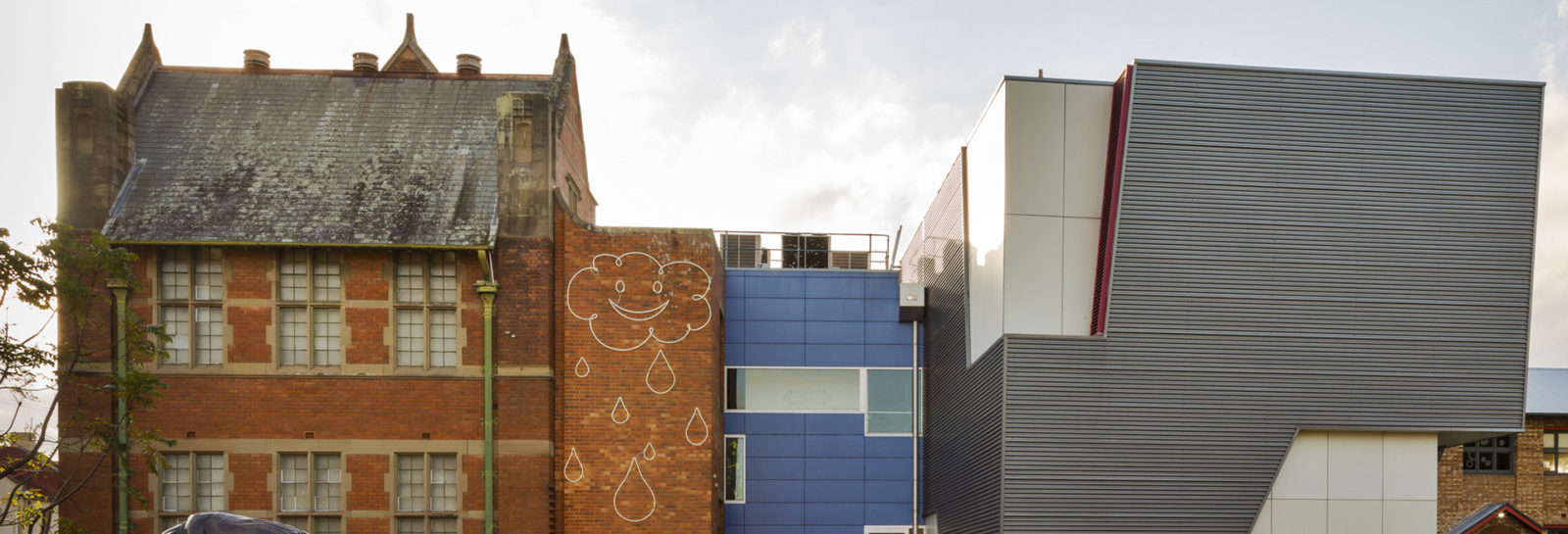
Steeped in history, the Federation Gothic building housing Maitland Regional Art Gallery is an awe-inspiring example of early 1900s architecture. Officially opened in 1910, the building was constructed to house the Maitland Technical College, which it continued to do until 1987. Technical education experienced many changes during this life of the building. Only two years later the building behind the Gallery was added to provide more class space. If you look closely at the brickwork of the two buildings, it is clear that they were to be eventually joined by a walkway.

Of course, the history of buildings within central Maitland is not complete unless mention is made of the 1955 Maitland flood. The Maitland Technical College was closed for three weeks following the disaster. The flood destroyed most of the College records and ruined the relatively new addition, the Technological Museum. Twenty-two showcases were smashed and at least half of the exhibits were destroyed. The Museum was abandoned and most of the remaining exhibits were sent to be included in the Sydney Museum of Applied Arts and Science.

The main building at the front of the site which now houses the Gallery is not only vitally important because of its role in technical education. Architecturally, it is one of the most significant buildings in Maitland and, in fact, it has features which are of great importance state wide. Designed by the then government architect, Colonel W. L. Vernon, the building has a structural system which is one of the earliest of its type in New South Wales. The upper floor comprises steel beams and a suspended reinforced concrete slab. This system was used in other buildings of the same period; however Maitland Technical College was one of the first and finest. The detail on the underside of the flooring in this building is much more refined and integrates very well with the ceiling of the ground floor.

Another remarkable feature of Maitland Regional Art Gallery is the cantilevered marble staircase. The white marble treads of the stairs with grey marble supports are distinguished even further by a rare rose coloured Newell post. Lighting the staircase is an enormous art nouveau, stained glass skylight. Look up and enjoy!

The façade of Maitland Regional Art Gallery is impressive, some say imposing. Built from red brick with Ravensfield sandstone details and a steep slate roof, the external, visual impact prepares the visitor for the inspirational interior. Five trachyte steps lead visitors into the Gallery’s foyer where Tasmanian Blackwood joinery and a parquetry Red Beam floor with a border of marble impress. Tudor roses are a feature of the foyer’s joinery as are the Tudor arches over the doorways and reception area.

Above: Maitland Technical College, West Maitland. Photograph taken in 1914

Above: Maitland Regional Art Gallery, photograph taken in 2003 after Stage 1 renovations had taken place.

Above: Maitland Regional Art Gallery, photograph taken in 2009 after the second and final stage of redevelopment.

Once inside the main gallery, Tudor gives way to Gothic. Three massive, late Gothic arches divide the exhibition space. The resounding impact upon walking into the Gallery is one of space and light. With a ceiling height of over five metres, even the two metre wide hallway at the rear of the main gallery is spacious enough to hang additional works. Constructed with creativity and technical achievement well ahead of its time, the unique features of the building certainly emphasise that architect, Walter Liberty Vernon remains an important architect in New South Wales’ history. Of undeniable heritage significance, Maitland Regional Art Gallery provides a visual feast. Art and architecture work in tandem and the result is magnificent.

Description of the new college building at the time of the
opening ceremony, 1910

The following article was published in the Maitland Mercury, 6 August 1910

Arches

The arches after Stage 1 of MRAG renovations, photograph taken in 2003.

The new college building is of brick with Ravensfield stone dressing and slate roof, the general design being perpendicular Gothic. The High Street façade forms an imposing but quiet and dignified aspect being flanked at each end with gables and massive rectangular piers, while the balance of the design has been well maintained. Between the two gables the front is divided by three half octagonal piers, standing well in relief. The main entry porch is approached from the footway by seven trachyte steps, and is surmounted by a large moulded stone segmental arch, the face above being divided into moulded panels with stone diaper work above. Fourteen stone mullion windows with stone quoins, fitted with metal frames, furnish light to the front rooms on the ground and first floors. The roof is steeply pitched and is of slate. Four dormer windows furnished in muntz metal relieve any monotony in the roof surface.

Landscape-Arches

The gothic arches of MRAG’s original main gallery space, photograph taken in 1999 prior to restoration.

The seven trachyte steps lead through the entrance porch, into the vestibule, from which access is gained to the stairs hall, through folding doors under a Tudor arch. The fittings of the vestibule are in Tasmanian Blackwood all to detail while the flooring is parquetry of red beam with a border of marble, the whole floor being set in concrete. Swinging doors under a Tudor arch give access from the vestibule to the No 1 museum court, which is separated from No 2 museum court, by three large late Gothic arches, with massive piers moulded and finished in Keen’s cement. The openings in each museum court are finished in the same way, and a projecting moulded dado at a height of eight feet runs throughout the two courts, the ceiling of which are plain, but finished with massive cornices. A corridor six feet wide leads from the lane entrance along the rear of the museum courts into the stairs hall, through a Tudor arch. Provision has been made for access from this corridor to the new wing provided for in the second contract. Access is gained to the first floor from the stairs hall by a handsome staircase of Australian marble, the treads being of white Sicilian marble. The railing is of wrought ornamental ironwork, with polished Blackwood handrail, and a second handrail along the wall. The walls of the stairs hall are in face-brick bedded in black mortar. The floor of the hall is parquetry of red beam timber with marble border, all bedded in concrete. Apart from the handrail, there is no woodwork in the staircase, which is probably the finest of its kind in the State.

The first floor provides accommodation as follows: – A large demonstration room a classroom for chemistry, geology, etc., lecture room, library and corridor. The demonstration room is over the museum and is 22 feet high, with an open roof, carried on three hammer beam trusses. All walls throughout the building are finished in Keen’s cement. Fireplaces are also provided liberally for asbestos fires. The resident master’s offices open from the stairs hall and are on the left of the vestibule.

Water and gas services are laid on throughout. The ventilation is a main feature of the building, and calls for special attention. The inlet vents are all of galvanised tubing, coming in at various points through large tubes, and having smaller branches. All exhausts from the ground floor, as well as from the first floor, are similarly constructed. The tubing is taken up through the walls and connects into larger shafts in the roof, where they are centralised and discharge through large cowls above the roof. The building has cost about £8,000 and was designed in the office of the government architect Colonel W L Vernon, and was erected by Mr B G Pearse of Hamilton under the able supervision of Mr John Harding, clerk of works.

Go forward to Maitland Stories »
    • > Join our e-lists
    • > Feedback
    • > Become a member
  • Gallery Details

    Address 230 High Street,
    PO Box 220 Maitland NSW 2320

    Phone 02 4934 9859

    Email

    The Art Gallery Trading Hours
    Tuesday - Sunday > 10:00am - 5:00pm

    The Gallery Shop Trading Hours
    Tuesday - Sunday > 10:00am - 4:45pm

    Art Gallery Cafe Trading Hours

    CLOSED Mondays & Public Holidays

  • > Home
  • > About
    • - History of the building & site
    • - Maitland Stories
      • - 2011: River Stories
      • - 2010: Recollecting Les Darcy
      • - 2010: Maitland Jewish Cemetery
      • - 2010: Picture That 1965
      • - 2010: Construction
      • - 2009: Intangible Collection
      • - 2009 – 2034: Time Capture
      • - 2006: Shot in Maitland
      • - 2005- 2007: City of the Arts
    • - MRAG volunteers
      • - Volunteer positions
        • - Reception/ Meet & Greet
        • - Openings & Events
        • - Gallery Shop
        • - Installation (Hanging Team)
        • - Education (workshops & programs)
        • - Administration (specialised volunteer program)
      • - Become a volunteer
    • - Sponsors, Patrons & Partners
    • - Venue hire
      • - Corporate & Private Functions
      • - Children’s parties
      • - Cafe Hire (external to MRAG)
  • > Exhibitions
    • - Current exhibitions
    • - Coming exhibitions
    • - Past exhibitions
    • - Touring exhibitions
    • - Exhibition proposals
  • > Art Factory
    • - Art Factory Exhibitions
    • - Art Factory Programs
  • > What's on
    • - Events archive
  • > Collection
    • - History of the collection
    • - Collection Focus
      • - Works on Paper
      • - Images of Maitland
      • - Les Darcy
      • - Asian Collection
      • - African Sculptures
    • - Collection resources
    • - Collection Highlights
      • - Margaret Olley
      • - Fetch Boy
      • - Buddha
  • > Education
    • - Self-Guided Visit (FREE)
    • - Coordinated Visit (PAID)
    • - Resources
  • > Members
    • - Become a member
    • - Member benefits
    • - MRAGM committee
    • - MRAGM Newsletter
  • > Shop
  • > Cafe
    • - Seraphine Menu
    • - Promotions & Offers
  • > Contact
    • - How to get here
    • - Staff Contacts
  • > Feedback

© maitland regional art gallery 2012